
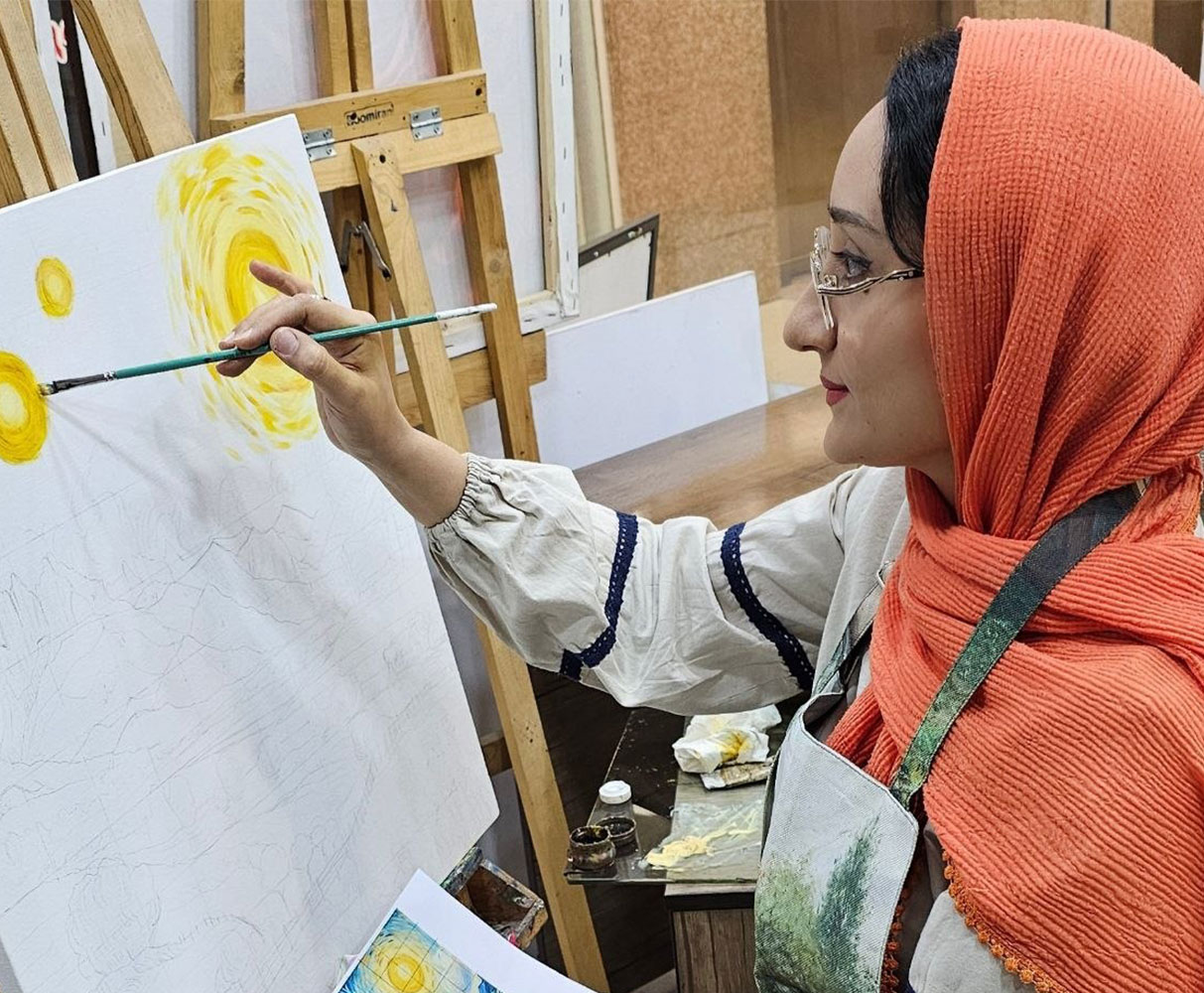
Oil painting is a long-established and widely used technique. Building colour in layers allows an artist to shape depth, light and shadow. Brushes, palette knives, canvas, a palette and suitable solvents are among its tools.
Underlayers and finishing layers
In layered oil painting, the lower layers generally contain less oil and later layers are made richer in oil. Keeping the layers compatible helps reduce the risk of cracking as the painting dries.
Glazing
Glazing uses thin, transparent layers of colour over a dry layer. Choosing transparent pigments and applying them carefully can add luminosity and depth to an image.
What layering makes possible
- A sense of depth and volume
- Control of colour transparency and luminosity
- Gradual correction and refinement
- More natural-looking colour relationships
- Support for durability when the layers are applied correctly
Oil painting calls for patience, care and attention to subtle details. Allowing time for each stage is part of making the work.
Review drawing fundamentals alongside your painting practice. For in-person tuition and an enquiry form, see painting lessons with Maryam Farkhondeh.


