
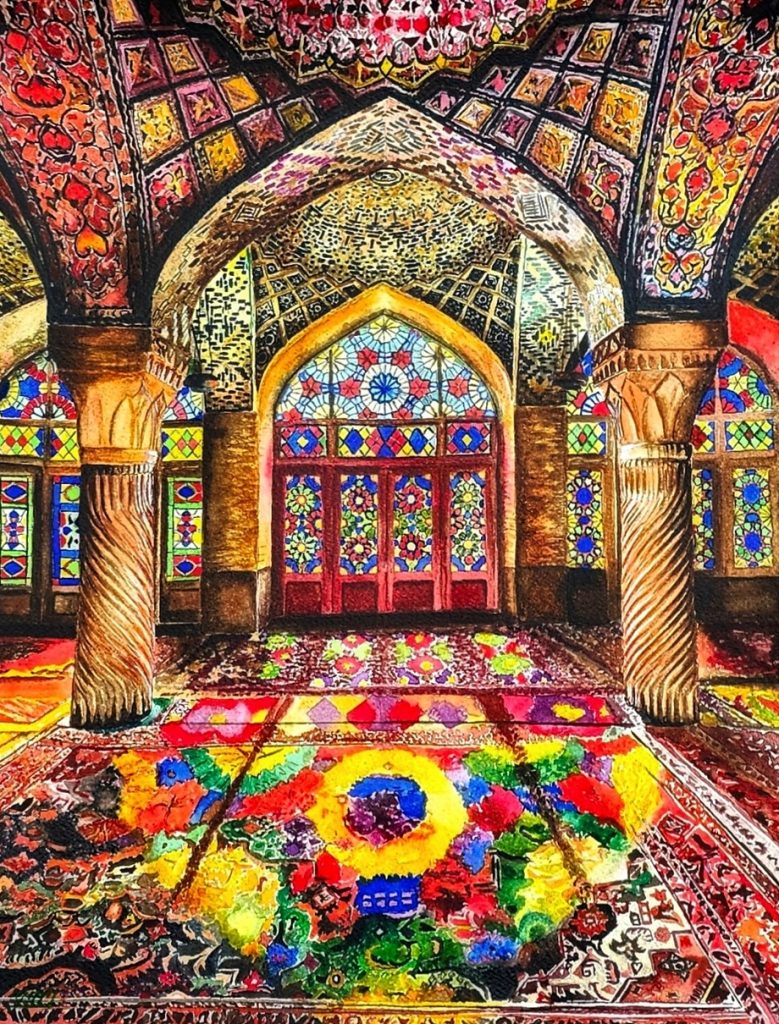
Controlling water and pigment on paper is central to watercolour painting. Adjusting their balance helps create transparency, texture and depth.
Wet on wet
Dampen the paper before applying colour. The colours spread softly into one another, making this useful for skies, clouds, backgrounds and gentle effects.
Wet on dry
Apply wet colour to dry paper to keep the edges more clearly defined. This suits details, lines and areas that need a precise boundary.
Layering
Build up transparent layers, allowing each layer to dry fully before adding the next. This helps develop shadows, depth and richer colour.
Dry brush
A brush loaded with colour but little water leaves the paper texture visible. It is useful for suggesting wood, stone, hair, grass and rough surfaces.
Salt, lifting and splattering
Sprinkling salt onto a wet wash creates crystalline textures as it dries, which can suggest snow, rock or a textured background. A tissue, clean brush or sponge can lift some colour to create highlights or adjust an area. Splattering small drops of colour can suggest stars, rain, leaves and spontaneous effects.
A few starting points
- Choose fairly thick watercolour paper.
- Pay attention to the amount of water and its balance with pigment.
- Begin with light colours and gradually work darker.
- Give each layer enough drying time to avoid muddy colours.
Alongside watercolour practice, revisit drawing fundamentals and form. To enquire about in-person tuition, see painting and watercolour lessons.


